
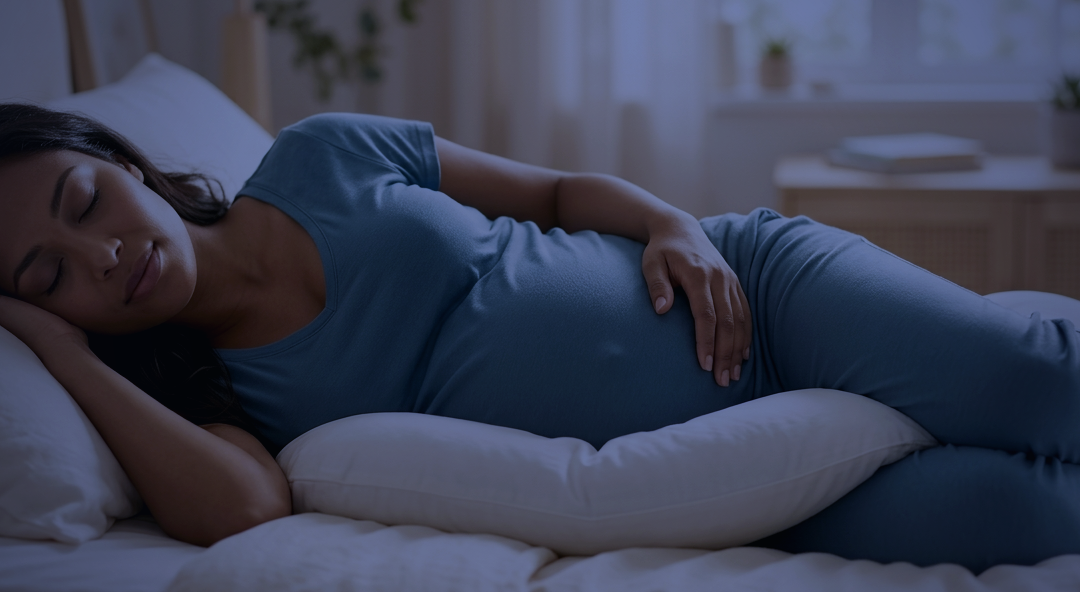
Untreated sleep apnea in pregnancy is more than just poor sleep. Pregnancy already makes the heart work harder to support both mother and baby. Sleep apnea adds to that load by causing repeated drops in oxygen through the night. Pregnancy also makes sleep apnea more likely to develop in the first place. Weight gain, fluid shifts, and the growing uterus all narrow the airway. Because many of these symptoms feel like normal pregnancy discomfort, sleep apnea often goes unnoticed while its risks quietly build.
According to Dr. Sharada Panse, who provides Sleep Disorder Treatment in Mumbai at Nidra Health Clinic, this is the most consistently underdiagnosed pattern she sees in pregnant patients. “Fatigue and poor sleep are things every pregnant woman is told to expect. The sleep apnea hides behind that. By the time anyone investigates, the risks have often been running for months.”
If snoring has gotten noticeably louder or sleep no longer feels restful, it’s worth having it checked rather than brushing it off as par for the course.
What risks does sleep apnea carry for the mother?
- Preeclampsia is one of the biggest concerns. A national cohort study spanning over 1.5 million pregnancies found an adjusted odds ratio of 2.22 for preeclampsia in women with OSA. That’s not a subtle number. Overnight oxygen drops paired with blood pressure surges place real strain on a cardiovascular system already stretched thin by pregnancy.
- Gestational diabetes shows up too. Women who snore during pregnancy are two to seven times more likely to develop it depending on the study. Drops in oxygen trigger the sympathetic nervous system, which then drives insulin resistance. It’s a similar pathway to the one linking sleep apnea to type 2 diabetes more broadly.
- There are also more serious complications that patients rarely hear about. Cardiomyopathy, congestive heart failure, and hysterectomy occur at two-and-a-half to three-and-a-half times the usual rate in women with OSA. ICU admissions run higher too, and hospital stays tend to be longer.
- Caesarean rates also tend to run higher. This happens partly because of hypertensive complications and partly due to concerns flagged during fetal monitoring in labour when oxygen delivery has often been compromised throughout the pregnancy.
If loud snoring, gasping during sleep, or unrefreshing rest sounds familiar, it’s worth getting a proper sleep apnea assessment instead of writing it off as just another part of pregnancy.
What are the risks to the baby, and what can be done?
Every apnea event lowers the mother’s blood oxygen, and that drop reduces what actually reaches the placenta. Over time, this has been tied to higher rates of intrauterine growth restriction, preterm birth, and neonatal ICU admissions.
CPAP is actually safe to use during pregnancy, something most women simply don’t realize. It’s recommended across all three trimesters. It keeps overnight oxygen levels steady, reduces the blood pressure fluctuations behind preeclampsia risk, and improves outcomes for both mother and baby when started early.
Getting diagnosed doesn’t mean a hospital stay either. A home sleep study done at any point during pregnancy gives a clear picture of what’s happening to the airway overnight. Just one night in your own bed. No admission required.
The best time to act is during the pregnancy itself, before complications get a real chance to take hold.
Read more in our earlier post: Why Sleep Apnea Is Missed in Women.
Your pregnancy deserves a proper sleep evaluation. Ready to take that step?
Why Choose Dr. Sharada Panse?
Dr. Sharada Panse completed her MD in Respiratory Medicine and her Fellowship in Sleep Medicine at St. John’s Medical College Bengaluru, one of the very few centres in India running three dedicated sleep laboratories. She followed this with an observership at NIMHANS Bengaluru which added a neurological and psychiatric perspective that most respiratory-trained sleep specialists don’t typically bring to the table.
Sleep apnea in pregnancy sits right at the crossroads of respiratory medicine, sleep medicine, and obstetric risk. Dr. Panse brings all three together in a single assessment. That’s exactly what a pregnant patient dealing with a sleep disorder needs.
To book a consultation call +91 9870413477.
FAQs
Snoring in pregnancy, when should it concern you?
Loud snoring most nights, paired with exhaustion that doesn’t lift by morning, isn’t typical. That combination is worth checking with a sleep study.
Can CPAP actually be used when pregnant?
Yes, it’s safe throughout all three trimesters. It helps keep oxygen levels and blood pressure steady overnight.
Does the risk build as pregnancy progresses?
Generally, yes. The third trimester tends to carry the highest risk, though OSA can develop or get worse earlier too.
Getting diagnosed while pregnant, is it complicated?
Not really. It’s just a one-night home sleep study, no hospital admission needed.
References
- Bourjeily G, Danilack VA, Bublitz MH, et al. Obstructive sleep apnea in pregnancy is associated with adverse maternal outcomes: a national cohort. Sleep Medicine. 2017. https://pmc.ncbi.nlm.nih.gov/articles/PMC5677512/
- Facco FL, Parker CB, Reddy UM, et al. Association Between Sleep-Disordered Breathing and Hypertensive Disorders of Pregnancy and Gestational Diabetes Mellitus. Obstetrics & Gynecology. 2017. https://pmc.ncbi.nlm.nih.gov/articles/PMC9045012/
Disclaimer: The information shared in this content is for educational purposes and not for promotional use.
