
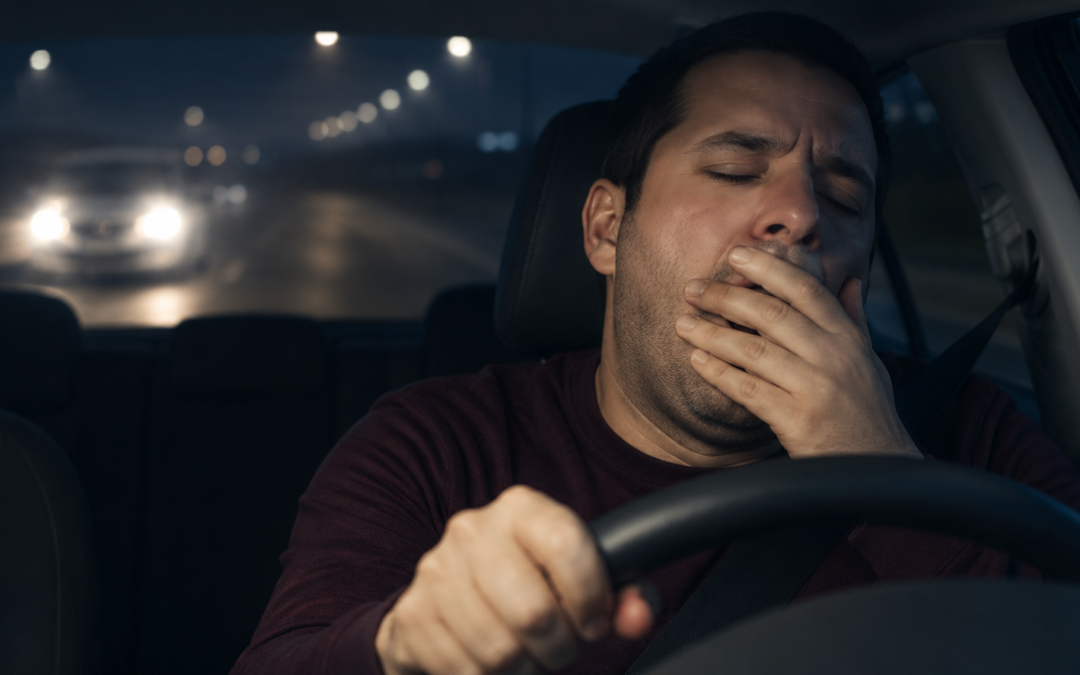
Yes, and the numbers aren’t small. If you have untreated obstructive sleep apnea, you’re two to ten times more likely to get into an accident than someone without it. One large Swedish registry study put the number at 2.45 times. Across the research, the same issues keep showing up: drivers dozing off at the wheel, reacting slower than they should, missing hazards they’d normally catch. Most of the time, the driver has no idea any of this is happening until it’s too late. That’s really the concerning part. People with untreated sleep apnea often assume they’re managing fine. The brain adapts to running on broken sleep, and in doing so, it stops registering just how compromised it has become.
Dr. Sharada Panse, who provides Sleep Disorder Treatment in Mumbai at Nidra Health Clinic, has seen this pattern often enough to consider it one of the more overlooked risks of OSA in India. “Most patients don’t realize their driving is impaired. They’ve been functioning at a reduced level for so long that it feels normal to them. That’s exactly what makes it dangerous.”
If you drive regularly and your sleep has been off for months, it’s worth getting checked before it turns into something more serious.
How does sleep apnea impair driving ability?
Every time an apnea event interrupts your sleep, it pulls you out of the restorative stages your brain actually needs. String enough of those together over a night, and by morning, your reaction time, attention span, and ability to judge hazards all take a hit. Some studies compare the effect to moderate alcohol intoxication.
Feeling sleepy isn’t always part of the picture. Many people with OSA don’t feel dramatically fatigued. They just feel slightly slower than usual, a bit foggy, not quite as sharp. It doesn’t sound like a serious risk in isolation, but on a highway, or in heavy Mumbai traffic, even a two-second lapse is more than enough to cause harm.
Then there’s the issue of microsleeps. These are brief episodes of sleep, sometimes lasting only two seconds, sometimes closer to thirty, that can occur mid-drive without warning. There’s no drowsy build-up beforehand, no sense of drifting off. The car simply starts to drift. This has been linked repeatedly to untreated OSA and accounts for a notable share of single-vehicle highway accidents.
Commercial drivers face an even greater version of this risk. Research on truck and bus drivers consistently finds high rates of undiagnosed OSA, in some cases 40% or more among those driving long-haul routes. Combined with extended shift hours, this is a well-documented but still under-addressed safety issue.
If any of this sounds familiar, unexplained fatigue, difficulty concentrating while driving, a close call or two, it’s worth getting a proper sleep apnea evaluation.
What does treatment actually do to the risk?
Here’s the encouraging part. In that same Swedish study, patients who used CPAP for at least four hours a night saw a 70% reduction in accidents. That’s not a modest improvement. It’s a treatment effect substantial enough to meaningfully change outcomes on the road.
The impairment isn’t permanent either. Unlike many neurological conditions, the cognitive and reaction-time deficits caused by OSA tend to reverse once treatment begins. Sleep patterns normalize, daytime alertness improves, and driving performance tends to follow.
The reasoning is fairly direct. Once the apnea is treated, the brain finally receives the restorative sleep it had been missing. That allows the prefrontal cortex, the region responsible for sustained attention and quick decision-making, to function as it should. The improvement isn’t instant, but within a few weeks of consistent CPAP use, the risk drops noticeably.
For anyone who drives often and hasn’t had their sleep assessed, this is worth prioritizing. It isn’t only a personal health matter. It’s a road safety one as well.
Read more about how sleep affects daily functioning in our detailed post on Can Sleep Apnea Cause Depression and Anxiety.
Wondering if your sleep could be putting you at risk? Book a consultation with Dr. Sharada Panse to find out.
Why Choose Dr. Sharada Panse?
Dr. Sharada Panse holds an MD in Respiratory Medicine and completed her Fellowship in Sleep Medicine at St. John’s Medical College, Bengaluru, one of the few institutions in India operating three dedicated sleep laboratories. She has clinical observership experience at NIMHANS, Bengaluru, and trained at P.D. Hinduja Hospital, Mumbai. She is a member of the World Sleep Society and the Indian Sleep Disorders Association, and consults at Shushrusha Citizens’ Co-operative Hospital, Dadar.
Driving-related fatigue isn’t treated as an afterthought in her practice. It’s part of her standard sleep evaluation for every patient.
To book a consultation, call +91 9870413477.
FAQs
Can I legally drive if I have sleep apnea?
Having sleep apnea doesn’t automatically stop you from driving. What matters is whether it’s untreated and causing significant daytime sleepiness. Getting diagnosed and treated is the responsible step, and for commercial licence holders, it’s often a legal requirement too.
How much does sleep apnea increase crash risk?
It depends on severity, but research points to a range of two to ten times higher risk. One large registry study found OSA patients were 2.45 times more likely to be in an accident than the average driver.
Does CPAP actually help with driving safety?
Yes, and the effect is significant. Studies show a 70% reduction in accidents among OSA patients who use CPAP consistently for four or more hours a night.
What if I don't feel sleepy while driving?
That doesn’t necessarily mean you’re unaffected. Microsleeps, slower reactions, and missed hazards can all occur even when you don’t feel particularly tired. Untreated OSA can impair performance without it ever feeling that way.
References
- Karimi M, Hedner J, Habel H, Nerman O, Grote L. Sleep apnea related risk of motor vehicle accidents is reduced by CPAP: Swedish Traffic Accident Registry data. Sleep. 2015. https://pmc.ncbi.nlm.nih.gov/articles/PMC4335527/
- Tregear S, Reston J, Schoelles K, Phillips B. Obstructive sleep apnea and risk of motor vehicle crash: systematic review and meta-analysis. Journal of Clinical Sleep Medicine. 2009. https://pmc.ncbi.nlm.nih.gov/articles/PMC2792976/
Disclaimer: The information shared in this content is for educational purposes and not for promotional use.
