
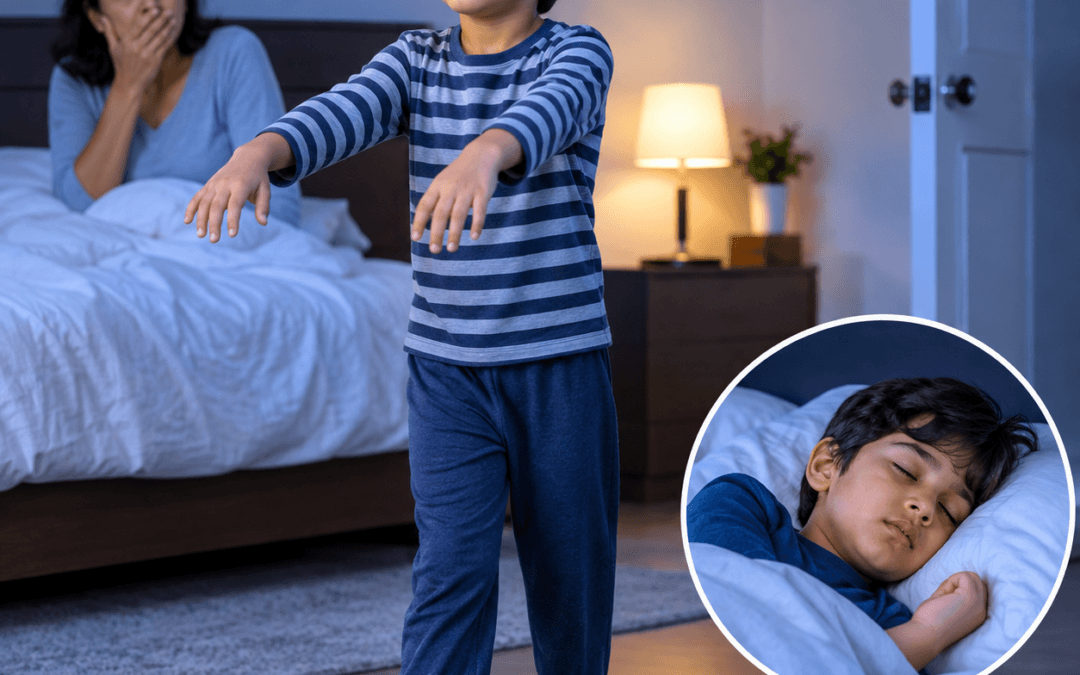
A child who walks around the house at night can frighten a parent, but it’s a common childhood habit and most children stop by their early teens. Doctors don’t usually worry about a few episodes spread over months. The picture changes if the walking is frequent, if the person has been hurt or nearly hurt, or if it starts in adulthood, because those cases can point to something else going on in sleep. During an episode the person is in deep sleep, often with eyes open and a blank look, and is hard to wake. Most remember nothing the next day.
According to Dr. Sharada Panse, Sleep Specialist in Mumbai, “A single episode in a child rarely worries me. I look at the pattern: how often it happens, at what age, and whether the person stays safe. Many families wait years before asking, so a calm conversation about what actually happens at night is a good place to begin.”
What Signs Suggest Sleepwalking Needs a Specialist?
Most children who sleepwalk have the odd episode and nothing more. A few things make it worth getting checked.
How often. Episodes several nights a week, or more than once in a night.
Age. It starts in the late teens or adulthood, or goes on long after childhood.
Risk of harm. The person has gone down stairs, left the house, handled the stove or hurt themselves.
Aggressive or dream-like behaviour. Shouting, striking out, or moving as if acting out a dream.
Tired in the day. Poor sleep at night usually shows up as sleepiness at school or work.
Snoring. Loud snoring with pauses in breathing may mean sleep apnea, which can trigger sleepwalking.
How Do Doctors Assess Sleepwalking?
There isn’t a test that confirms it. The doctor relies mostly on what the family has noticed: when in the night it happens, how long it goes on, and whether it has changed over time. Sleep loss, stress, fever, alcohol and some medicines are checked as possible triggers.
Other conditions also have to be ruled out. REM sleep behaviour disorder, night terrors and seizures during sleep can look much like sleepwalking, but they need different treatment. When the history doesn’t settle it, an overnight sleep study can record breathing, brain activity and body movements.
One episode during a fever, or after a night of very little sleep, doesn’t mean a disorder. If you’re trying to decide whom to consult, this post on qualifications to look for in a sleep specialist may help.
If you notice unusual nighttime behaviour, contact a doctor for guidance.
What Decides How Sleepwalking Is Managed?
Making the bedroom safe. Lock outside doors, keep the floor clear and fit a gate at the top of the stairs.
Regular sleep. A fixed bedtime and enough hours cut down episodes, particularly in children.
Finding the cause. If sleep apnea or another sleep disorder is behind it, treating that often brings the sleepwalking under control.
Medicines. These are used only when episodes are frequent or dangerous.
Review visits. They show whether things are improving.
Key Takeways
- Most children stop sleepwalking by their teens without treatment.
- Frequent episodes, injuries, aggressive behaviour or a start in adulthood need a specialist’s opinion.
- Diagnosis is based on history, and a sleep study is used when the history isn’t enough.
- Home safety matters first, and treating any underlying sleep disorder often helps.
FAQs
Should I wake someone who is sleepwalking?
It’s better to lead them back to bed gently, since being woken suddenly can frighten them.
Is sleepwalking always a sign of a sleep disorder?
No. Many children sleepwalk and grow out of it.
Can sleepwalking start in adulthood?
It can. A sleep disorder or a medicine is often behind it, so it should be checked.
Who can diagnose sleepwalking?
A sleep specialist, after taking a detailed history and doing a sleep study if needed.
References
NHS – Sleepwalking
https://www.nhs.uk/conditions/sleepwalking
Oxford University Hospitals NHS – Paediatric Non-Respiratory Sleep Service
https://www.ouh.nhs.uk/children/services/medical-services/sleep/
Disclaimer:This blog is for educational purposes only.
