
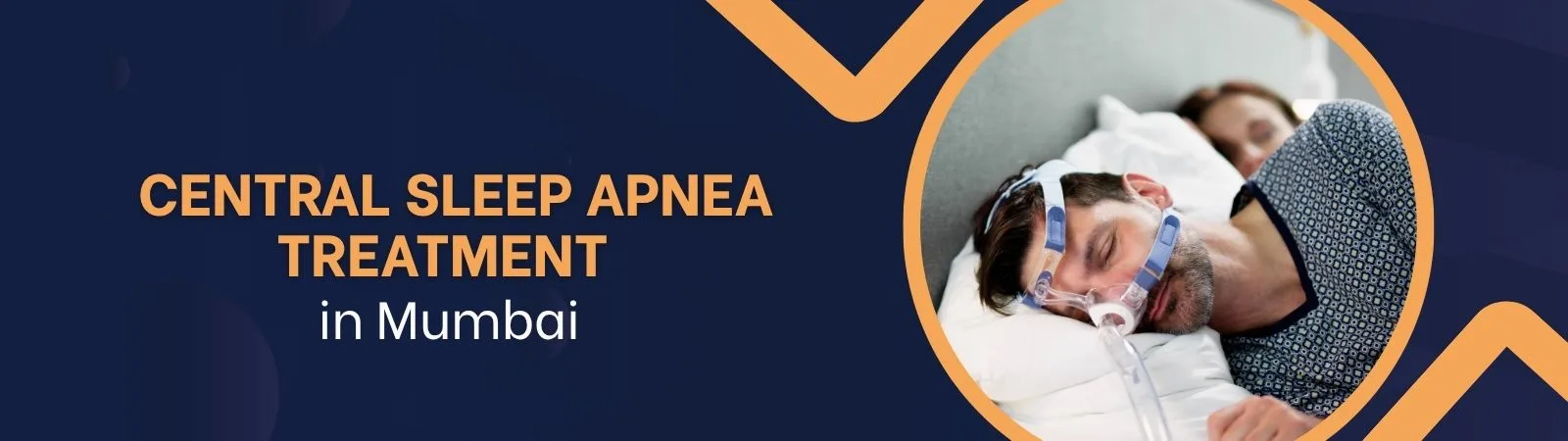
Central Sleep Apnea in Mumbai
Are you waking up frequently at night, feeling tired despite adequate sleep, or experiencing unexplained daytime sleepiness? Sleep disruptions can sometimes be linked to breathing problems that occur during sleep. Central Sleep Apnea is a sleep-related breathing disorder where the brain temporarily fails to send proper signals to the muscles responsible for breathing, causing repeated pauses in breathing during sleep.
Dr. Sharada Panse, a noted sleep specialist in Mumbai, explains, “Breathing pauses during sleep may have causes beyond airway blockage. Central sleep apnea requires careful evaluation to identify underlying neurological, cardiac, respiratory, or medication-related factors for appropriate treatment planning.”
Nidra Health Clinic, led by Dr. Sharada Panse, offers comprehensive evaluation and management for Central Sleep Apnea in Mumbai. She has experience treating complex sleep disorders including central sleep apnea, obstructive sleep apnea, insomnia, and obesity hypoventilation syndrome. Her approach focuses on accurate diagnosis, personalised care, and evidence-based treatment planning.
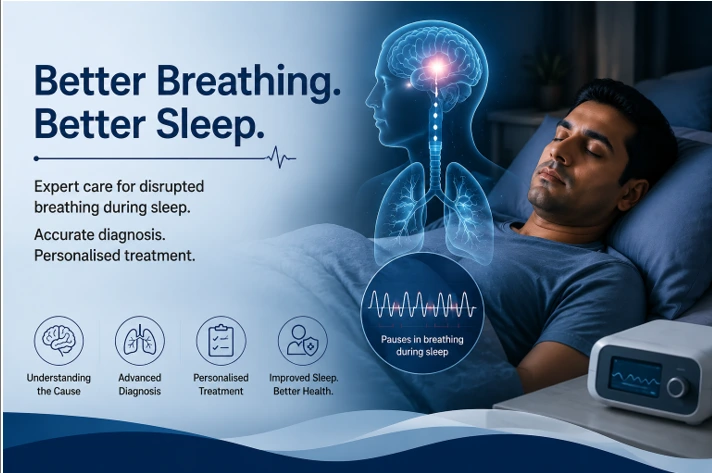
What Is Central Sleep Apnea?
Are you waking up frequently at night, feeling tired despite adequate sleep, or experiencing unexplained daytime sleepiness? Sleep disruptions can sometimes be linked to breathing problems that occur during sleep. Central Sleep Apnea is a sleep-related breathing disorder where the brain temporarily fails to send proper signals to the muscles responsible for breathing, causing repeated pauses in breathing during sleep.
Dr. Sharada Panse, a noted sleep specialist in Mumbai, explains, “Breathing pauses during sleep may have causes beyond airway blockage. Central sleep apnea requires careful evaluation to identify underlying neurological, cardiac, respiratory, or medication-related factors for appropriate treatment planning.”
Nidra Health Clinic, led by Dr. Sharada Panse, offers comprehensive evaluation and management for Central Sleep Apnea in Mumbai. She has experience treating complex sleep disorders including central sleep apnea, obstructive sleep apnea, insomnia, and obesity hypoventilation syndrome. Her approach focuses on accurate diagnosis, personalised care, and evidence-based treatment planning.
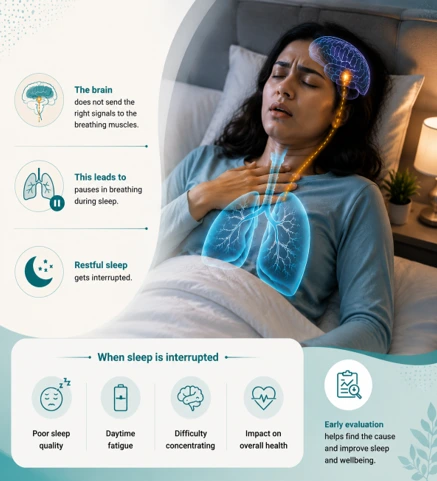
Breathing problems during sleep need proper evaluation. Connect with a sleep specialist for expert guidance.
Do you feel tired even after sleeping for enough hours? Let’s discover the common signs linked with central sleep apnea.
Symptoms of Central Sleep Apnea
Symptoms of central sleep apnea may occur during sleep as well as during waking hours. Some people may not notice breathing interruptions themselves, and symptoms may first be observed by a sleeping partner.
Night-Time Symptoms
Common sleep-related symptoms include:
- Repeated pauses in breathing during sleep
- Frequent awakenings
- Shortness of breath after waking
- Restless sleep
- Difficulty maintaining continuous sleep
- Sudden awakenings with discomfort
- Irregular breathing patterns
- Chest pain
- Insomnia-like symptoms
- Leg movements
Daytime Symptoms
Daytime symptoms may include:
- Excessive tiredness
- Difficulty breathing
- Difficulty concentrating
- Morning headaches
- Reduced energy levels
- Mood changes
- Poor memory
- Reduced work performance
- Feeling unrefreshed after sleep
Symptoms of central sleep apnea may overlap with other sleep disorders. A detailed evaluation helps determine the actual cause.
Did you know central sleep apnea can occur in different forms? Let’s explore the major types and how they differ.
Types of Central Sleep Apnea
Primary Central Sleep Apnea
This type occurs without an identifiable underlying medical condition. Breathing control becomes disrupted during sleep despite the absence of another clear cause.
Treatment-Emergent Central Sleep Apnea
Previously known as complex sleep apnea, this may develop in some patients after starting treatment for obstructive sleep apnea with positive airway pressure therapy.
Drug or Medication-Related Central Sleep Apnea
Certain medications, especially opioid-based medicines, may affect the brain’s breathing control system and contribute to CSA.
Understanding the type of central sleep apnea helps determine the most appropriate treatment approach.
Why does the brain stop sending breathing signals during sleep? Let’s explore the factors that may contribute to central sleep apnea.
What Causes Central Sleep Apnea?
Central Sleep Apnea occurs when communication between the brain and breathing muscles becomes temporarily disrupted.
Common causes include:
Heart Conditions
Certain heart conditions, including heart failure, can affect breathing regulation during sleep and increase the risk of CSA.
Neurological Disorders
Conditions affecting the brain or nervous system, such as stroke or neurological disorders, may interfere with breathing control.
Medications
Some medications, particularly opioid medicines, can reduce the brain’s respiratory drive and contribute to breathing pauses.
High Altitude Exposure
Changes in oxygen levels at high altitudes may affect breathing patterns during sleep.
Heart Conditions
Certain heart conditions, including heart failure, can affect breathing regulation during sleep and increase the risk of CSA.
Neurological Disorders
Conditions affecting the brain or nervous system, such as stroke or neurological disorders, may interfere with breathing control.
Medications
Some medications, particularly opioid medicines, can reduce the brain’s respiratory drive and contribute to breathing pauses.
Neurological Disorders
Conditions affecting the brain or nervous system, such as stroke or neurological disorders, may interfere with breathing control.
High Altitude Exposure
Changes in oxygen levels at high altitudes may affect breathing patterns during sleep.
Identifying the cause is essential because treatment often focuses on managing both the sleep disorder and the underlying condition.
Who may be more likely to develop central sleep apnea? Let’s discuss the factors that can increase the risk of this sleep disorder.
Risk Factors for Central Sleep Apnea
Risk factors may include:
Age-related changes in breathing regulation
Heart failure or cardiovascular conditions
History of stroke or neurological disorders
Use of opioid medications
Living or travelling to high-altitude areas
Existing sleep disorders
Certain medical conditions affecting the nervous system
Male gender, particularly with associated health conditions
How can doctors identify central sleep apnea accurately? Let’s understand the diagnosis process.
How Is Central Sleep Apnea Diagnosed?
Diagnosis involves a detailed assessment of symptoms, medical history, and sleep patterns.
Clinical Evaluation
The assessment may include:
- Sleep history
- Symptoms during sleep and daytime
- Medication history
- Existing medical conditions
- Neurological and cardiac history
Additional Evaluation
Depending on findings, further assessment of heart function, neurological health, or medication effects may be recommended.
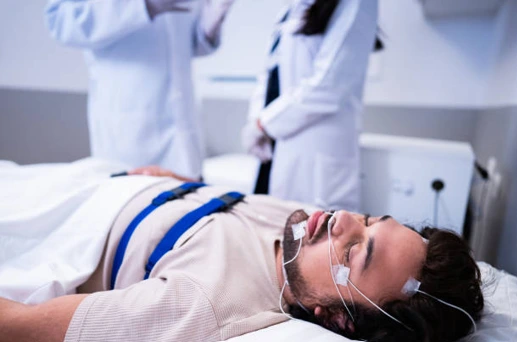
Sleep Study
A sleep study is an important diagnostic tool for evaluating breathing patterns during sleep.
Overnight polysomnography may record:
- Brain activity
- Breathing effort
- Airflow
- Oxygen levels
- Heart rate
- Sleep stages
- Body movements
The results help differentiate central sleep apnea from obstructive sleep apnea and other sleep disorders.
How can central sleep apnea be managed? Let’s explore the available sleep apnea treatment in Mumbai at Nidra Health Clinic.
Treatment for Central Sleep Apnea in Mumbai
Dr. Sharada Panse offers treatment for CSA based on the underlying cause, severity of symptoms, and overall health condition.
Treating the Underlying Cause
Managing associated conditions such as heart problems, neurological disorders, or medication-related causes may improve breathing patterns during sleep.
Lifestyle Support
Healthy sleep habits, regular physical activity, weight management, and management of associated health conditions can support overall sleep health.
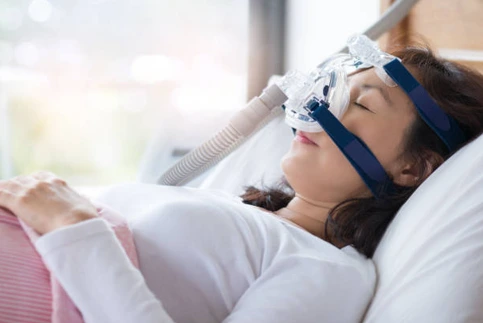
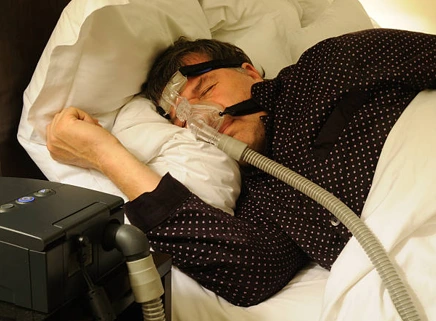
Positive Airway Pressure Therapy
Depending on the patient’s condition, different positive airway pressure therapies may be considered.
Options may include:
- CPAP therapy
- BiPAP therapy
- Adaptive Servo-Ventilation (ASV) in selected cases
The appropriate device and settings depend on individual sleep study findings and medical history.
Oxygen Therapy
Some patients may benefit from supplemental oxygen therapy when low oxygen levels contribute to breathing instability.
Medication Adjustment
When medications contribute to CSA, reviewing them with the treating physician may be required.
At Nidra Health Clinic, treatment planning focuses on understanding the cause of CSA and selecting the most suitable approach for each patient.
Seeking specialised care for sleep apnea in Mumbai? Let’s discover how Dr. Sharada Panse, a sleep medicine expertise supports effective management.
Why Choose Dr Sharada Panse for Central Sleep Apnea Treatment in Mumbai?
Dual Expertise in Respiratory and Sleep Medicine
With advanced training in both respiratory medicine and sleep medicine, Dr. Sharada Panse evaluates sleep-related breathing problems from a broader clinical perspective.
Experience in Neurology-Related Sleep Disorders
During clinical training at NIMHANS, Bengaluru, she gained exposure to neurological sleep conditions, helping in the assessment of complex sleep symptoms beyond common breathing disorders.
Focus on Accurate Diagnosis Before Treatment
Since Central Sleep Apnea may have multiple causes, emphasis is placed on confirming the diagnosis and understanding contributing factors before recommending therapy.
Holistic Sleep Disorder Management
By combining respiratory expertise with sleep medicine knowledge, she provides comprehensive care for patients seeking sleep disorder treatment in Mumbai.
Patient-Friendly Treatment Guidance
Clear explanations about the condition, available treatments, and long-term management help patients make informed decisions about their sleep health.
Specialised Experience With Sleep Studies
Trained in interpreting sleep-related breathing patterns and diagnostic findings to differentiate Central Sleep Apnea from other sleep disorders.

Specialised care can help manage complex sleep-related breathing concerns. Get in touch with an expert for personalised treatment guidance.
Get In Touch
FAQs
1. How is central sleep apnea different from obstructive sleep apnea?
Obstructive sleep apnea occurs due to airway blockage, while central sleep apnea occurs due to reduced breathing signals from the brain.
2. Is central sleep apnea serious?
CSA may be associated with underlying health conditions, so timely diagnosis and appropriate management are important.
3. Can central sleep apnea be cured?
Treatment depends on the cause. Managing underlying conditions and using suitable therapies can help control symptoms.
4. Can CPAP treat central sleep apnea?
CPAP may help some patients, but other therapies may be considered depending on the type and cause of CSA.
5. When should I consult a sleep specialist?
Consult a specialist if you experience unexplained daytime sleepiness, repeated awakenings, breathing pauses, or poor sleep quality.
Disclaimer: The information shared in this content is for educational purposes and not for promotional use.