
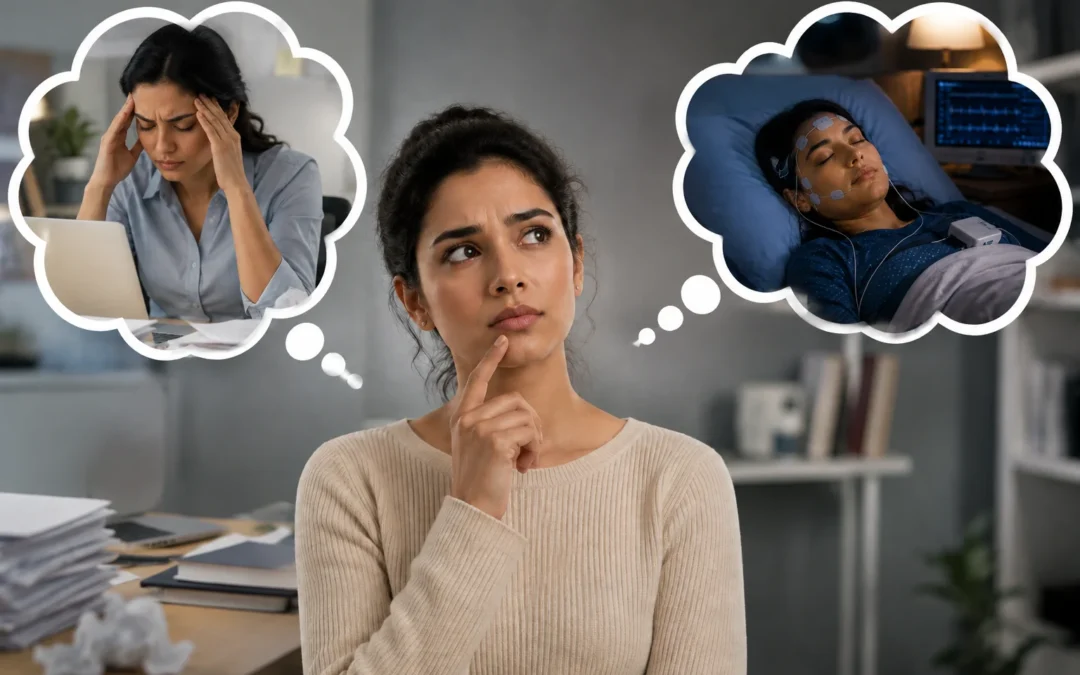
Stress keeps the mind switched on when it should be winding down. That’s why a rough week at work can wreck a few nights of sleep. But that kind of trouble usually fades once the stressful stretch passes. A genuine sleep disorder doesn’t work that way. It sticks around long after the stress is gone. Often with breathing interruptions or daytime exhaustion that has no obvious trigger. And it needs more than a calmer week to fix.
According to Dr. Sharada Panse, who provides Sleep Disorder Treatment in Mumbai at Nidra Health Clinic, “Patients tell me the stress passed months ago and the sleep still hasn’t come back. That’s usually the moment it stopped being stress and became something that needs an actual diagnosis. Waiting for it to sort itself out at that point rarely works, it just delays the right treatment.”
What Does Stress-Related Sleep Trouble Look Like?
So stress-driven insomnia has a fairly recognisable shape, once you know what to look for.
Tied to a Trigger: The sleeplessness lines up with something specific: a deadline, an exam, a family situation. Remove the trigger and sleep tends to follow.
Comes and Goes: Some nights are fine. Others aren’t. The pattern is inconsistent, mirroring whatever’s happening in daily life.
Racing Thoughts at Night: Replaying conversations. Rehearsing tomorrow’s problems. The mind just won’t settle once the lights go off.
Resolves on Its Own: Once the stressful period ends, sleep usually normalises within a week or two. No medical intervention needed.
If this sounds familiar and your sleep problems are continuing beyond the stressful period, it’s worth getting them evaluated through insomnia treatment in Mumbai. Waiting it out indefinitely isn’t a strategy.
What Actually Signals a Sleep Disorder?
Some patterns don’t respond to a calmer schedule or a lighter workload. They point to something clinical.
No Clear Trigger: No exam. No deadline. No obvious reason. And still, the trouble persists.
Breathing Disruptions: Loud snoring, gasping, or witnessed pauses in breathing during sleep point toward a physical, not psychological, problem.
Extreme Daytime Sleepiness: Falling asleep at your desk or nodding off while driving, despite a full night in bed, isn’t ordinary tiredness.
Months, Not Weeks: Because stress alone doesn’t usually stretch past a few weeks. When it does, something else is going on.
When sleeplessness continues beyond the original trigger, it may be time to look beyond stress and consider approaches like CBT-I for Insomnia.
Not sure if your sleep trouble is situational or something more?
Why Choose Dr. Sharada Panse to Tell the Difference?
Dr. Sharada Panse holds an MD in Respiratory Medicine and completed a Fellowship in Sleep Medicine at St. John’s Medical College, Bengaluru. One of the very few institutions in India running three dedicated sleep laboratories. A clinical observership at NIMHANS, Bengaluru, adds a psychiatric and neurological lens too, and that matters here specifically, since anxiety, depression, and true sleep disorders often overlap in how they present. (It’s a distinction that’s easy to miss without the right training.) At Nidra Health Clinic, that overlap gets sorted out properly. Not assumed.
Getting this distinction wrong costs time either way. Mistake a real sleep disorder for ordinary stress, and it keeps worsening while it’s left alone. Mistake ordinary stress for a medical disorder, and you end up with unnecessary tests you didn’t need. So a proper evaluation settles which one you’re actually dealing with, before either mistake happens. Call +91 9870413477 to book your consultation.
FAQs
How long should stress-related sleep trouble last before it's a concern?
Beyond three to four weeks without an obvious trigger, it’s worth getting checked.
Can stress and a sleep disorder happen at the same time?
Yes, stress often worsens an underlying disorder that was already present.
Does snoring mean it's a sleep disorder, not stress?
Usually, yes. Stress alone rarely causes loud snoring or breathing pauses.
Will a doctor test for both stress and a sleep disorder?
Yes, evaluation typically covers both, since they often need different treatments.
Disclaimer: This blog is for educational purposes only. If your sleep trouble persists or comes with snoring or daytime sleepiness, book an evaluation.
