
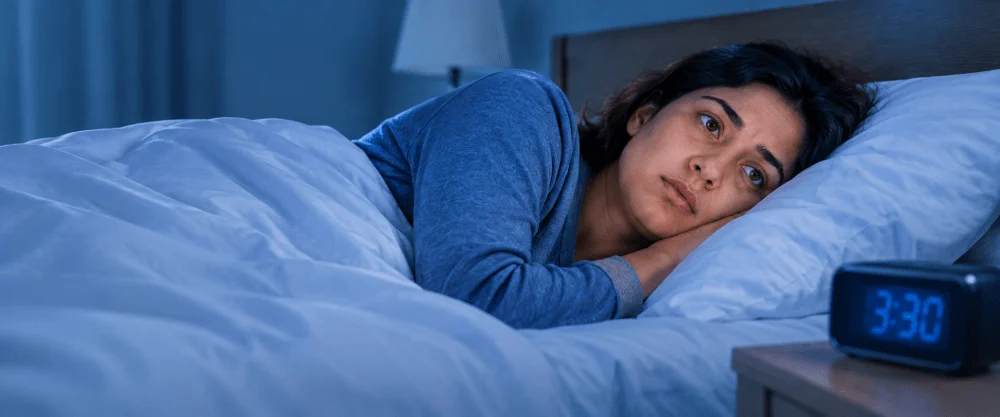
A sleep disorder isn’t one single thing. It’s an umbrella term for conditions that throw off your normal sleep pattern and, over time, chip away at your overall health. Some make it hard to fall asleep. Some interrupt breathing mid-sleep. Some show up as movement, not tiredness at all. And knowing which type you’re dealing with changes everything about how it gets treated.
According to Dr. Sharada Panse, who provides Sleep Disorder Treatment in Mumbai at Nidra Health Clinic, “Patients often describe one big problem: bad sleep. But there isn’t just one condition behind that. Insomnia, apnea, and restless legs all look like ‘bad sleep’ from the outside, and each needs a completely different fix.”
What Are the Physical Types of Sleep Disorders?
So some disorders are rooted in the body itself, not the mind.
Sleep Apnea: Breathing repeatedly stops and starts through the night, usually without you realising it.
Restless Legs Syndrome: An urge to move the legs that flares up specifically at rest, worse at night.
Periodic Limb Movement Disorder: Involuntary jerking or twitching during sleep. Often confused with restlessness alone.
Narcolepsy: Sudden, overwhelming daytime sleepiness, sometimes with a brief loss of muscle control. A neurological condition, not a lack of discipline.
Breathing-related disorders in particular deserve a proper look, not a wait-and-see approach. For those looking for sleep apnea treatment in Mumbai, an early assessment is what actually narrows down the right fix.
What Are the Behavioural and Timing-Based Types?
But plenty of sleep disorders have nothing to do with breathing or movement at all.
Insomnia: Trouble falling or staying asleep, most nights, for weeks on end.
Hypersomnia: Excessive daytime sleepiness despite a full night’s sleep. Not laziness. A real condition.
Parasomnias: Sleepwalking, night terrors, acting out dreams. Unusual behaviour during sleep itself.
Circadian Rhythm Disorders: Your internal clock and your actual schedule stop matching up.
So naming your sleep disorder symptoms clearly is often the fastest way for a doctor to trace them back to the actual disorder behind them.
Wondering which type of sleep disorder actually matches your symptoms?
Why Choose Dr. Sharada Panse to Identify Your Sleep Disorder?
Dr. Sharada Panse holds an MD in Respiratory Medicine and a Fellowship in Sleep Medicine from St. John’s Medical College, Bengaluru, one of India’s few centres running three dedicated sleep labs. A clinical observership at NIMHANS adds the neurological and psychiatric read that many of these conditions actually need.
Not every sleep problem has the same cause. At Nidra Health Clinic, your symptoms get looked at properly, not slotted into a generic diagnosis, so what’s actually affecting your sleep gets named before any treatment starts. Call +91 9870413477 to book your consultation.
FAQs
What's the most common type of sleep disorder?
Insomnia, followed closely by obstructive sleep apnea in most adult populations.
Can someone have more than one sleep disorder at once?
Yes, overlapping disorders are common and often go undiagnosed for years.
Are sleep disorders always lifelong conditions?
No, many respond well to treatment once correctly identified and managed.
Do children get different sleep disorders than adults?
Somewhat, though core categories like parasomnias and apnea affect both groups.
Disclaimer: This blog is for educational purposes only. If your symptoms match more than one type, book an evaluation to get the right diagnosis.
