
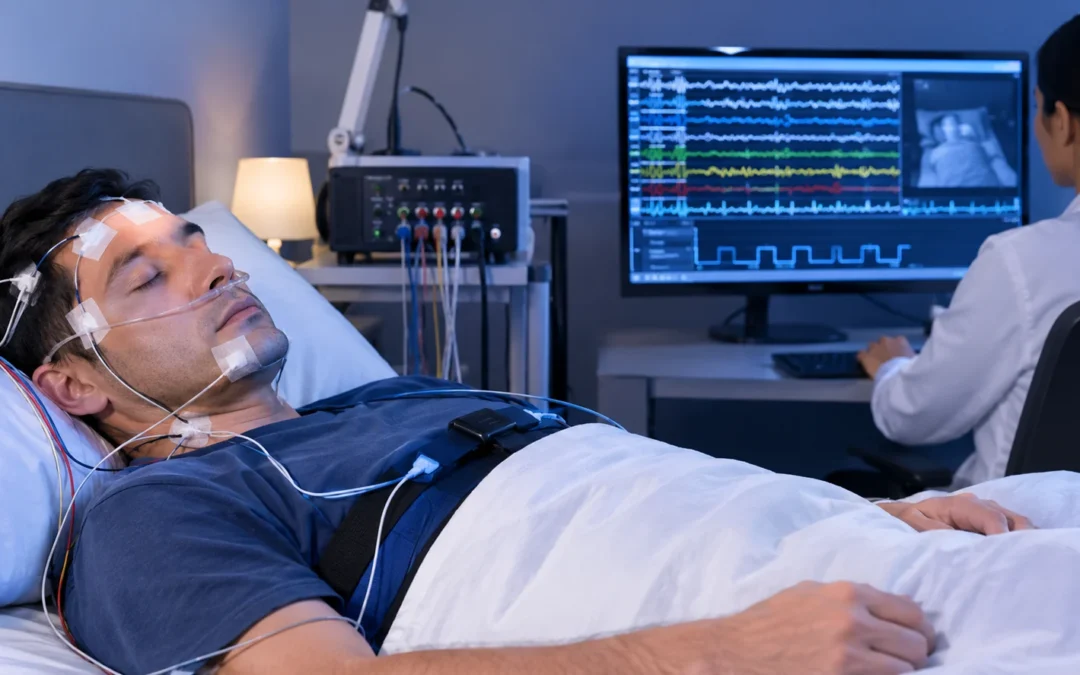
Most people picture a sterile hospital ward. It’s usually the opposite. You spend the night in a private room, closer to a hotel than a hospital, while small sensors quietly track your brain activity, breathing, heart rate, and movement as you sleep. Nothing about it involves needles or pain. It just involves a lot of wires and one long night of being watched.
According to Dr. Sharada Panse, who provides Sleep Disorder Treatment in Mumbai at Nidra Health Clinic, “Patients walk in expecting something clinical and cold. Most relax once they see the room. It’s dark, quiet, and honestly, a fair number of patients sleep better there than they expected.”
What Happens Before You Fall Asleep?
So the night starts well before anyone actually goes to sleep.
Arrival and Setup: You arrive a couple of hours before your usual bedtime, change into your own nightclothes, and settle in.
Sensor Placement: A technologist attaches small sensors to your scalp, face, chest, and legs. Painless, just a bit fiddly.
Equipment Check: Every sensor gets tested before lights out, blinking, breathing, moving your legs, all to confirm the signals are reading correctly.
Final Instructions: You’re told how to call the technologist if you need the bathroom or something feels off during the night.
If the study is being done to check for sleep apnea, the results can help your doctor decide whether you need further evaluation or sleep apnea treatment in Mumbai.
What Happens While You're Actually Sleeping?
But once the lights go off, the technical work shifts to the team monitoring you.
Continuous Monitoring: A technologist watches your data and a video feed from another room, all night, without interruption.
Sleep Staging: Brainwave patterns get tracked in real time to identify each stage of sleep as it happens.
Breathing and Oxygen: Airflow, chest movement, and oxygen levels are recorded to catch any pauses in breathing.
Morning Wrap-Up: Sensors come off around your usual wake time, and you’re free to go, no recovery period needed.
If you’re weighing whether all of this is even necessary for your case, it’s worth reading our comparison of home vs lab sleep studies first.
Curious what your own sleep lab night would actually look like?
Why Choose Dr. Sharada Panse for Your Sleep Lab Test?
Dr. Sharada Panse holds an MD in Respiratory Medicine and a Fellowship in Sleep Medicine from St. John’s Medical College, Bengaluru, one of India’s few centres running three dedicated sleep labs. That means the same physician reading your results is also the one who decided you needed the test in the first place.
At Nidra Health Clinic, nothing about the process is outsourced or generic. Call +91 9870413477 to book your consultation.
FAQs
Does a sleep lab test hurt?
No, the sensors are attached externally and cause no pain at all.
Can I move around during the test?
Yes, normal movements like turning over or adjusting are expected and recorded.
How many nights does a sleep lab test usually take?
Usually just one night, though some cases need a second for titration.
Will I be able to sleep with all the wires attached?
Most people do, though it can feel unfamiliar for the first hour or so.
Disclaimer: This blog is for educational purposes only. If you’re preparing for a sleep study, follow your physician’s specific instructions for that night.
