
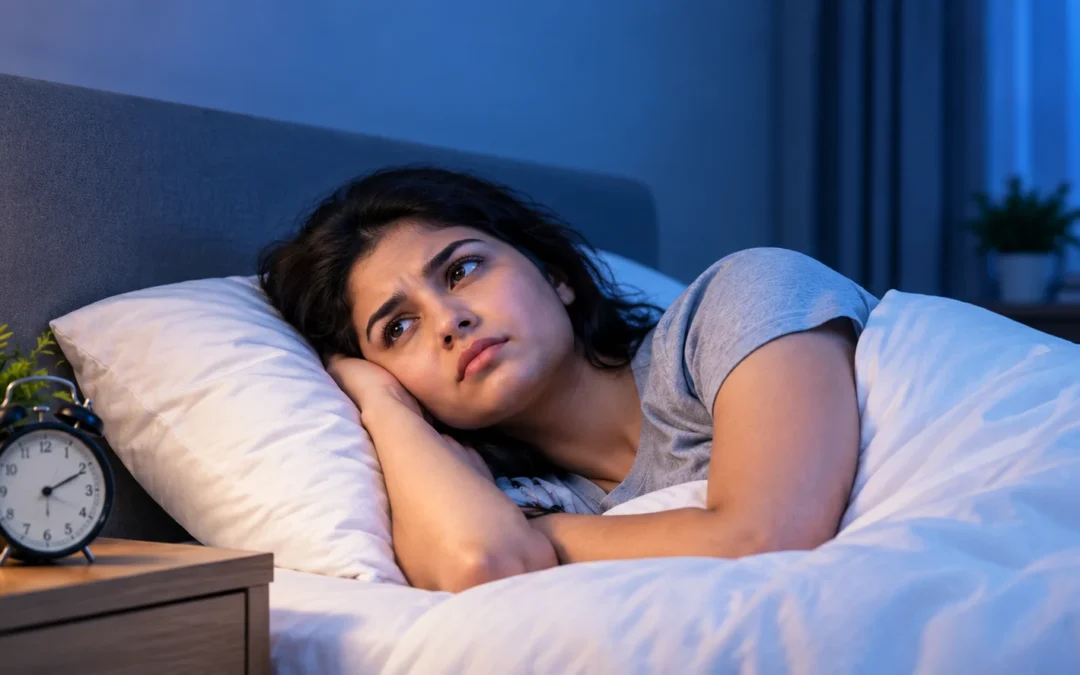
A single bad night rarely comes out of nowhere. Trace it back far enough, and it’s usually two things working together: something going on in the mind, and something in the daily routine that’s been quietly working against sleep for a while. Psychological pressure and existing mental health conditions explain a large share of it on their own. The rest tends to come down to habits nobody thinks to question.
According to Dr. Sharada Panse, who provides Sleep Disorder Treatment in Mumbai at Nidra Health Clinic, “Most people think their sleep problem just appeared, out of nowhere, for no reason. It didn’t. Trace it back and there’s almost always something specific driving it. Sometimes it’s what’s happening in someone’s head. Sometimes it’s the hour they’ve decided is fine to still be on their phone.”
What Psychological Factors Cause Sleep Disturbances?
The mind is involved more than most people assume.
Psychological Stress: Work pressure. Financial strain. A difficult stretch at home. The mind stays alert long after the day is, technically, over.
Existing Mental Health Conditions: Depression and anxiety rarely sit quietly alongside disrupted sleep. Each one tends to worsen the other, and the cycle can be hard to break without addressing both.
Racing Thoughts at Bedtime: The day gets replayed. Tomorrow gets rehearsed. Bedtime becomes a planning session instead of rest.
Major Life Changes: A new job. A loss. A relationship ending. Nothing needs to look dramatic from the outside for sleep to still take the hit.
Once psychological pressure starts affecting sleep for more than a couple of weeks, it’s worth getting it evaluated and exploring appropriate insomnia treatment in Mumbai, rather than waiting to see if it passes.
What Daily Habits Cause Sleep Disturbances?
Not all disrupted sleep comes from the mind, though. Some of it is simply routine.
Irregular Sleep Schedule: A different bedtime every night. The body’s internal clock never really gets the chance to settle.
Late Caffeine or Screens: Either one delays the drop in alertness the body needs before sleep can actually begin.
No Wind-Down Period: Straight from a screen, or a stressful conversation, into bed. No transition in between at all.
Sedentary Daytime Habits: Very little movement during the day tends to leave less physical tiredness to fall back on by night.
If sleep trouble continues even after these habits get corrected, it’s worth reading how to tell stress or a disorder apart, since the two get confused for each other more often than people expect.
Wondering what’s actually behind your own sleep disturbance?
Why Choose Dr. Sharada Panse for Your Sleep Lab Test?
Dr. Sharada Panse holds an MD in Respiratory Medicine and completed a Fellowship in Sleep Medicine at St. John’s Medical College, Bengaluru. A clinical observership at NIMHANS adds a psychiatric lens that matters here in particular, given how closely mental health and sleep tend to move together.
At Nidra Health Clinic, the actual cause gets identified first. Treatment comes after, not before. Call +91 9870413477 to book your consultation.
FAQs
Can stress alone cause long-term sleep disturbances?
Yes. Left unmanaged, stress-related sleep trouble can develop into chronic insomnia.
Do mental health conditions always come before sleep problems?
Not necessarily. The relationship often runs in both directions at once.
Can fixing daily habits solve sleep disturbances on its own?
Sometimes. Though persistent cases usually need more than habit changes alone.
Is it normal to have both psychological and lifestyle causes at once?
Very common, actually, and often the reason a cause is hard to pin down.
Disclaimer: This blog is for educational purposes only. If sleep disturbances persist despite lifestyle changes, book an evaluation to find the actual cause.
