

Hypersomnolence Treatment in Mumbai
Do you feel excessively sleepy during the day despite getting enough hours of sleep at night? Struggling to stay awake while working, studying, travelling, or performing daily activities can affect productivity, concentration, and overall quality of life. Persistent daytime sleepiness may be a sign of hypersomnolence, a sleep disorder characterised by an increased need for sleep or difficulty staying awake during normal waking hours.
Dr. Sharada Panse, a leading sleep specialist in Mumbai, states, “Daytime sleepiness is not always due to a busy schedule or inadequate sleep. When excessive sleepiness continues despite proper sleep duration, it is important to evaluate the underlying cause, as it may be related to sleep disorders, medical conditions or changes in sleep regulation.”
With expertise in respiratory and sleep medicine, Dr. Sharada Panse offers safe and effective hypersomnolence treatment in Mumbai. She evaluates and manages hypersomnolence, sleep apnea, insomnia and other sleep disorders through detailed assessment, accurate diagnosis and personalised treatment plans. At Nidra Health Clinic, she provides comprehensive sleep care focused on improving sleep quality, daytime alertness and overall wellbeing.
Feeling sleepy during the day even after adequate rest? Let’s understand why excessive daytime sleepiness should not be ignored.
Excessive Daytime Sleepiness
Excessive daytime sleepiness (EDS) refers to an increased tendency to fall asleep during the day or difficulty maintaining alertness during normal activities. Occasional tiredness can happen due to stress, poor sleep habits or a demanding routine. However, persistent sleepiness that affects daily functioning may indicate an underlying sleep disorder.
People experiencing excessive daytime sleepiness may:
- Struggle to remain awake during meetings or conversations
- Feel tired shortly after waking up
- Need frequent naps during the day
- Have difficulty focusing on tasks
- Experience reduced performance at work or studies
- Feel sleepy while driving or travelling

EDS is one of the common symptoms of hypersomnolence and requires evaluation when it becomes frequent or affects safety and daily life.
What Is Hypersomnolence?
Hypersomnolence is a condition where a person experiences excessive daytime sleepiness or an increased need for sleep. Individuals with hypersomnolence may sleep for longer durations but still feel unrefreshed or have difficulty staying alert during the day.
Unlike normal tiredness, hypersomnolence is persistent and can interfere with work, relationships, learning and daily activities.
Hypersomnolence may occur due to:
- Poor-quality sleep
- Sleep-related breathing disorders
- Neurological sleep conditions
- Certain medications
- Mental health conditions
- Medical illnesses
- Disorders affecting the sleep-wake cycle

A detailed assessment helps identify whether excessive sleepiness is caused by insufficient sleep, another sleep disorder or an underlying medical condition.
Common Symptoms of Hypersomnolence
Symptoms may vary depending on the cause and severity of excessive sleepiness.
Common symptoms include:
Excessive daytime sleepiness
Frequent need for daytime naps
Difficulty staying awake during normal activities
Feeling tired despite adequate sleep
Trouble concentrating
Difficulty waking up after sleep
Memory difficulties
Slower thinking or reduced alertness
Irritability or mood changes
Reduced motivation
Sleeping for unusually long hours
Feeling unrefreshed after naps
Excessive daytime sleepiness
Sleeping for unusually long hours
Feeling unrefreshed after naps
Difficulty staying awake during normal activities
Slower thinking or reduced alertness
Frequent need for daytime naps
Irritability or mood changes
Feeling tired despite adequate sleep
Reduced motivation
Memory difficulties
Difficulty waking up after sleep
Trouble concentrating
Some individuals may experience sudden episodes of sleepiness, while others may have a continuous feeling of fatigue and reduced alertness.
Persistent daytime sleepiness can affect health, safety and daily performance. Connect with a sleep specialist for proper evaluation and guidance.
What causes excessive sleepiness during the day? Let’s explore the factors that may contribute to hypersomnolence.
Causes of Hypersomnolence
Hypersomnolence can develop due to various sleep-related, medical and lifestyle factors.
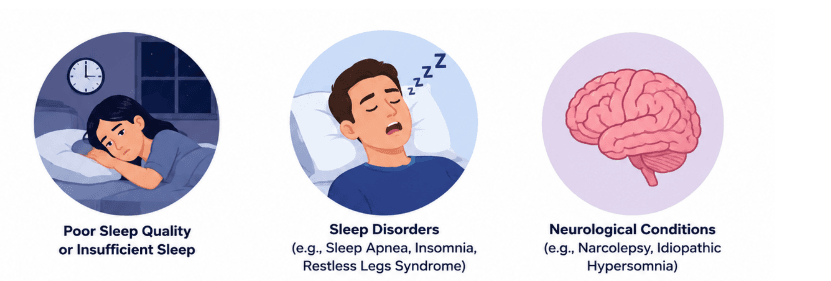
Sleep Disorders
Conditions such as obstructive sleep apnea, central sleep apnea, insomnia and circadian rhythm disorders can reduce sleep quality and cause daytime tiredness.
Insufficient Sleep
Not getting enough sleep regularly due to work schedules, lifestyle habits or sleep disruption can lead to excessive daytime sleepiness.
Sleep Disorders
Conditions such as obstructive sleep apnea, central sleep apnea, insomnia and circadian rhythm disorders can reduce sleep quality and cause daytime tiredness.
Insufficient Sleep
Not getting enough sleep regularly due to work schedules, lifestyle habits or sleep disruption can lead to excessive daytime sleepiness.
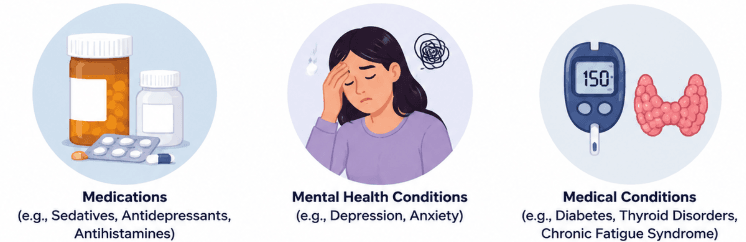
Neurological Sleep Disorders
Certain neurological conditions affecting sleep regulation may contribute to excessive sleepiness.
Medications
Some medicines, including sedatives and certain medications affecting the nervous system, may increase daytime drowsiness.
Medical Conditions
Certain health conditions, including hormonal disorders, chronic illnesses and neurological diseases, may affect energy levels and sleep regulation.
Mental Health Conditions
Stress, anxiety and depression can affect sleep patterns and contribute to persistent fatigue and sleepiness.
Neurological Sleep Disorders
Certain neurological conditions affecting sleep regulation may contribute to excessive sleepiness.
Medications
Some medicines, including sedatives and certain medications affecting the nervous system, may increase daytime drowsiness.
Medical Conditions
Certain health conditions, including hormonal disorders, chronic illnesses and neurological diseases, may affect energy levels and sleep regulation.
Mental Health Conditions
Stress, anxiety and depression can affect sleep patterns and contribute to persistent fatigue and sleepiness.
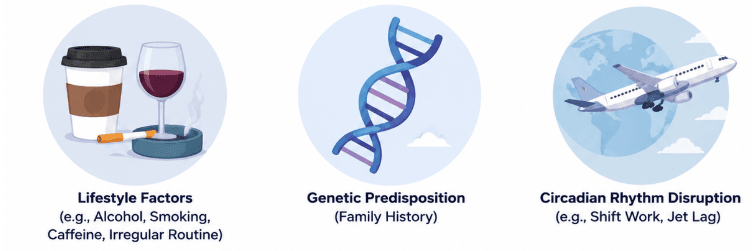
Identifying the underlying cause is important because treatment depends on the specific reason behind excessive sleepiness.
Lifestyle Factors
Irregular sleep schedules, excessive screen exposure, alcohol consumption and poor sleep habits may also contribute.
Identifying the underlying cause is important because treatment depends on the specific reason behind excessive sleepiness.
Lifestyle Factors
Irregular sleep schedules, excessive screen exposure, alcohol consumption and poor sleep habits may also contribute.
Could excessive sleepiness be linked to another condition? Let’s discuss the disorders commonly associated with daytime drowsiness.
Conditions Associated With Excessive Daytime Sleepiness
Excessive daytime sleepiness may occur with several sleep and medical conditions, including:
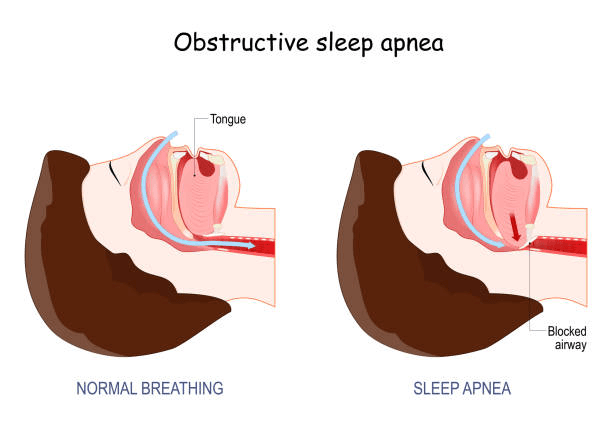
Obstructive Sleep Apnea
Repeated breathing interruptions during sleep can reduce sleep quality and cause daytime fatigue.
Central Sleep Apnea
Disruption in the brain’s signals controlling breathing can lead to fragmented sleep and daytime sleepiness.
Narcolepsy
Narcolepsy is a neurological sleep disorder that may cause sudden episodes of sleepiness associated with sleep attacks and difficulty maintaining wakefulness.
Idiopathic Hypersomnia
This condition causes excessive sleepiness despite adequate sleep and may involve prolonged sleep duration and difficulty waking up.

Insomnia
Poor sleep quality caused by difficulty falling asleep or staying asleep can result in daytime tiredness.
Circadian Rhythm Sleep Disorders
Disruptions in the body’s internal clock can affect sleep timing and daytime alertness.
Restless Legs Syndrome
Sleep disruption caused by uncomfortable sensations in the legs may contribute to daytime fatigue.
Kleine Levine Syndrome
Intermittent episodes of excessive daytime sleepiness with can last from weeks to months associated with hypersexuality, hyperphagia, low mood, apathy, memory problems etc. Between episodes, the person is completely normal with no sleepiness or behavioral symptoms.
Proper diagnosis helps distinguish hypersomnolence from other conditions with similar symptoms.
Finding the reason behind persistent sleepiness is important for effective care. Let’s explore the diagnostic process for hypersomnolence.
How Is Hypersomnolence Diagnosed?
Diagnosis begins with a detailed consultation to understand sleep patterns, symptoms and possible contributing factors.
Sleep History Assessment
The evaluation may include:
- Sleep duration and quality
- Daytime sleepiness patterns
- Nap frequency
- Sleep schedule
- Snoring or breathing problems
- Medication history
- Lifestyle factors
Sleep Questionnaires
Validated questionnaires may be used to assess the severity of daytime sleepiness and its impact on daily activities.
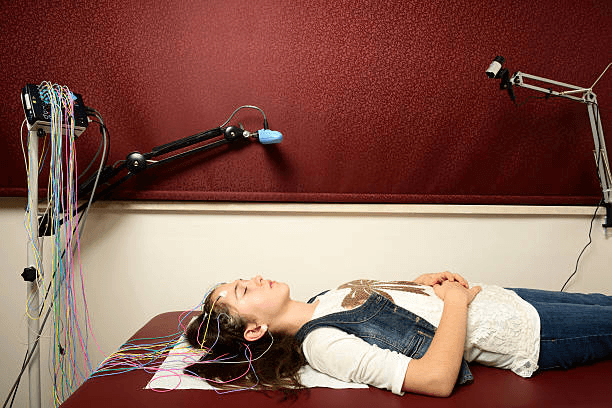
Sleep Studies
A sleep study may be recommended to evaluate sleep quality and identify conditions such as sleep apnea or other sleep disorders.
Tests may include:
- Overnight polysomnography
- Multiple Sleep Latency Test (MSLT)
- Other specialised sleep assessments
Medical Evaluation
Blood tests, neurological evaluation or assessment of underlying medical conditions may be advised when required.
A detailed diagnosis helps ensure that treatment addresses the actual cause of excessive sleepiness.
Blood tests, neurological evaluation or assessment of underlying medical conditions may be advised when required.
A detailed diagnosis helps ensure that treatment addresses the actual cause of excessive sleepiness.
Accurate diagnosis helps identify the right cause of excessive sleepiness. Get in touch with a sleep specialist for proper evaluation and guidance.
Looking for ways to manage excessive daytime sleepiness? Let’s explore the treatment options available for hypersomnolence in Mumbai at Nidra Health Clinic.
Hypersomnolence Treatment Options
Dr. Sharada Panse offers hypersomnolence treatment in Mumbai based on the underlying cause, symptoms and individual health requirements.
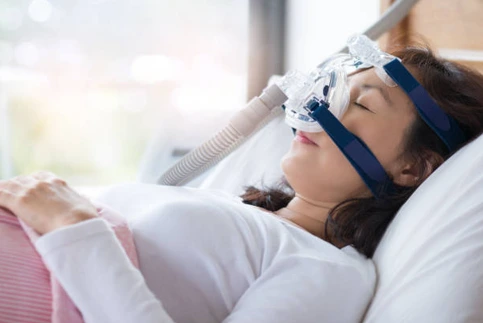
Treating Underlying Sleep Disorders
If hypersomnolence is caused by sleep apnea, insomnia or another sleep disorder, treating the primary condition can improve daytime alertness.
Lifestyle and Sleep Routine Management
Healthy sleep habits may include:
- Maintaining consistent sleep timings
- Creating a comfortable sleep environment
- Limiting caffeine and alcohol near bedtime
- Regular physical activity
- Reducing screen exposure before sleep
Behavioural Strategies
Structured daytime routines, planned naps and sleep scheduling may help some patients manage symptoms.
Long-Term Monitoring
Follow-up helps evaluate treatment response, improve sleep habits and make necessary adjustments.
Medication Management
In selected cases, medicines may be considered to improve alertness under specialist supervision.
Lifestyle Support
Healthy sleep habits, regular physical activity, weight management, and management of associated health conditions can support overall sleep health.
The right treatment approach depends on accurate diagnosis and personalised assessment.
Seeking specialised care for sleep apnea in Mumbai? Let’s discover how Dr. Sharada Panse, a sleep medicine expertise supports effective management.
Why Choose Dr. Sharada Panse for Hypersomnolence Treatment in Mumbai?
Focused Evaluation of Excessive Sleepiness
Dr. Sharada Panse evaluates persistent daytime sleepiness beyond common fatigue to identify whether it is linked to sleep disorders, medical conditions, or lifestyle factors.
Expertise in Sleep-Wake Disorders
Her experience includes assessing hypersomnolence along with other sleep conditions such as sleep apnea, insomnia, and circadian rhythm disorders.
Focus on Accurate Diagnosis Before Treatment
Since Central Sleep Apnea may have multiple causes, emphasis is placed on confirming the diagnosis and understanding contributing factors before recommending therapy.
Respiratory Medicine Expertise
With a background in respiratory medicine, she understands the connection between breathing-related sleep problems and daytime alertness.
Experience With Complex Sleep Cases
Clinical exposure across respiratory and sleep medicine settings supports the evaluation of patients with varied and complex sleep concerns.
Patient Education and Support
Focuses on helping patients understand their condition, treatment options, and practical steps to improve sleep habits.
Comprehensive Sleep Disorder Management
Provides evaluation and care for patients seeking specialised sleep disorder treatment in Mumbai with a focus on long-term improvement.

Get In Touch
FAQs
1. What causes excessive daytime sleepiness?
It may be caused by sleep disorders, medical conditions, medications, poor sleep habits, or neurological sleep disorders.
2. Can sleep apnea cause daytime sleepiness?
Yes. Repeated breathing interruptions during sleep can reduce sleep quality and cause excessive daytime fatigue.
3. How much daytime sleepiness is considered abnormal?
Sleepiness that frequently affects work, studies, driving, or daily activities may require evaluation.
4. Can hypersomnolence be treated?
Yes. Treatment depends on the underlying cause and may include sleep management, treating disorders, and medical therapies.
5. Is hypersomnolence a lifelong condition?
The duration depends on the underlying cause. Some cases improve after treating contributing factors, while others may require long-term management.
Disclaimer: The information shared in this content is for educational purposes and not for promotional use.